“Game Art is a fast moving industry and it is necessary to
be able to work quickly, effectively and as part of a team. This project should
give you the opportunity to understand what your chosen specialism would be
like. Together we will be working towards a large goal (Game), this will have
separate elements (Levels) and these levels should have individual content that
you can put towards your portfolio.
This project has elements that will allow concept artists,
character artists, environment artists and engine artists to develop their
skills, and hopefully allow you as a year group to create something larger and
more impressive. “
The job role I was assigned was Environment artist, and I was part of the Cold
team. We were tasked with creating a “cold” level, which would sync with the
other levels throughout this project. The style and feel would need to feel
consistent within every level, so we needed to make sure that we worked in
collaboration with all of the other teams.
We started by first making mood boards and working out what’s cold, but not too
cliché. While we sorted the first stages of concepting, we also tried to
organise a time scale and looked into making an asset list based off our most probable
ideas. We looked at what objects we would need and them what others may be good
to add as a stretch goal. We each looked an individual idea each and produced
concepts based on that. I began to concept some icy caves and underground
tunnels; we had a layout and because of this we started to work out areas of
the level to fit the “shape” of our level and to show a progression through the
terrain. We eventually went along a quite classic idea of cold, with ice and
snow. We decided the best route to go, was to make out level similar to a
Nepalese mountain range with traverses past or through a religious artefact and
deep into some icy caves towards the scary level.
Cave Concepts and Style Progression
During our concepting stage, we all as a group found it
difficult to pinpoint a specific style for our project. I decided to produce
some style progression boards to help us pinpoint the exact style we were
looking for. Eventually as a group we decided we wanted a style very similar to
that of the Trine games; this meant
that the shapes of our models were stylised, but the materials were realistic.
Once we were settled on an idea as a group, we mapped out a
potential route around the level and how we could traverse it and use all the
space possible. We then assigned different world assets to each of us in the
group to produce. I was given the task of producing the statue hero asset, bell
tower and other smaller bits; as well as tweaking.
Early Level Layout
We made the whitebox of the level to start with, and updated
the models over time. I sculpted the statue and some of the stone damage on the
bell tower using Zbrush. I found it quite tricky sculpting parts of the statue
due to the lack of skill using Zbrush and modelling organic objects. However, I
managed to reproduce our concept quite accurately in my opinion. I had some
trouble baking some of the normal down from my high poly sculpt, but I soon
resolved these and managed to get a decent Normal map which really pushed the
detail with the materials. The materials were quite simple to produce, with
PBR, it is quicker to texture and gives a much better result, so I was quite
pleased with the outcome of my assets.
Final Statue Concept
Being a cold level involving ice and snow, we obviously had
to work out a way to coat our assets with snow. Dom found a way of simulating
snow falling in a scene in 3dsmax, this produced a layer of snow as a separate mesh.
This was used to give a sense of thick snow. However the rest of the snow was added
using vertex painting within Unreal Engine 4. Once Dom had applied it, I worked
on improving the mask used in the material to make it look a little more
convincing as real snow and not fake spray-on snow.
I think the Cold team produced a convincingly cold level. We
produced some nice concepts and assets and managed to get it functioning as a
level how we wanted it to within the six week restriction. However, we did come
across problems which hindered and slowed our progress. As a group of 4, one
concept artist and 3 environment artists, it’s not surprising that some of our
ideas conflicted and that compromises had to be made. But the problem I found
was that at times, someone would start to work on something they hadn’t
informed the rest of us about. This meant that there were occasions where
things were almost produced twice, or something had already been completed and
forgotten about. If I could change this, I would have liked more communication
between the lot of us, so that the pipeline process was more fluent.
Overall the project was a good test for the year group as a
whole to work as a production sized group and to produce a decent looking, four
level side scroller. There were highs and lows, but I think many of us produced
portfolio worthy pieces and learnt a lot about the software we use, themselves
and each other. Hopefully this will help us work in collaboration during our
Final Major Projects.
We’re a couple of weeks into our big 6 week, year group
project and everyone’s plans are coming together. In my teams, cold level, we
noticed we’d need quite a broad and dynamic mountain range to fill in the vast
background. This gave me the idea to create some mountains using world machine.
Having never used this software before, it was all very new
to me and I had to learn the basics to get the hang of it. I didn’t realise,
however, just how easiy this program is to use. Luckily we have the full
licence on the computers in the university labs and so I had access to all the
features.
Mountain Range Layout
I first started by searching for tutorials on making icy
mountains on YouTube. There weren’t many around, but from the ones I found,
they were very similar in terms of work flow. I build up my flow graph in the
program as I followed the tutorial. From this, I then experimented with all the
values of each node. I got a few good
results with some nice sharp edges on the mountain faces.
I tried a few different times and created about 5 of these
different alp-like mountains. Each one was unique and it was interesting to see
the same basic node structure make so many different peaks. When it came to
texturing it, there was a macro node which was recommended in the tutorials which
provided colour information. However, I had trouble using these macros at first
as
they didn’t work on the uni computers. Because of this, I had to download
the free version of world machine at home and input the macros through that
method. I then saved out the flow graph and rendered the model and diffuse files
at uni using the full licence.
Colourmap Output
The final results came out really well and a bonus with the
software is that it can render a static mesh, diffuse map and height map as
outputs all at the same time. This meant that I could render a mesh of a high
poly mountain. I then made a low poly version simply by creating a plane with
segments of about 26x26 which I then overlayed above the high poly mesh. I then
used the 3dsmax retopology tools “conform” tool to, almost, wrap over the high
poly. It was then just a case of unwrapping and baking the diffuse and normal
information.
Left: High Poly Mesh - Right: Low Poly Mesh
This method of producing mountains was actually pretty
successful, as they were in the background and not really a focal point of the
level, they were cheap to make and texture. I also made a volcano for the Hot
level to use as it was just a slightly modified workflow to this one. Also, I
had the experience with the software which none of the team from that level
had.
For this project, we were tasked with making a scene consisting of a throne, character and backdrop as a group; in my case, there were 5 in my team.. The title of "King of the Dead" was given to us and we had to produce a single image of the scene to show our whole vision as if we were a small outsourcing and concepting studio proving to a large company that we could work for them.
Once we knew the brief and
specifications, we looked at exactly what it is we had to achieve. We looked at
ways in which we could produce an original idea that didn’t focus too much on
the classic ideals of a “dead king” or “king of the dead” that is portrayed so
often in media today or in the past.
We began to brainstorm and
research ideas and visual reference. Once we began to get some ideas we started
to concept. We spent about 3 days mainly concepting a scene which fitted our
vision, with our main focus on iteration. Therefore, every time we felt we were
getting somewhere, we idolised what could be changed and iterated it further.
This meant that our idea was constantly changing and helped us to discover
ideas we hadn’t even thought of yet. During this time, I also produced a very
rough whitebox of our layout.
We had a few ideas which
we began to mix and so started to model what we had in our final concepts. We
decided to split into different roles, which meant that I was modelling the
pod, which was the main focal point of our throne. I worked alongside Rebecca
who was working on the model for the rest of the throne. We talked about the
stylisation of it to some extent. We had already decided that the scene would
be realistic and give the sense that it was built by an ancient civilisation;
with reference from the ancient Aztecs and the Egyptians.
I unwrapped the pod once I
had finished modelling and textured the main body of it before creating a
separate ice/glass shader for the pod’s screen material. I also created a
lightmap during this process. We used google drive to pool all of our resources
and to put finished models and textures, ready to import into Unreal Engine 4.
I went back to our original whitebox and began to update the models. Once I’d
placed some of the main assets, I then built the shaders using the textures I
had been given and added extra nodes and branches in the shaders where necessary.
We then looked at all of our potential
lighting conditions which I had previously experimented with and tweaked this
to nail the mood we wanted for our final scene. After we had added post processing effects in engine and
sorted our composition and camera angles, we had our final image.
I was actually very pleased with our final
outcome and was pleasantly surprised at the way our concept continuously
changed and flipped our entire mind-set almost everytime we discussed new
concepts as a group. Although we did sometimes have a disagreement about which
way we wanted to take the concepts, we worked well in finding quick solutions.
So here it is. The end of my second year at university! What
happened? Where has the time gone? All I know is that I’ve matured as an artist
and as a person. My skills have thrived within the family I have within my
course year.
Throughout this year I have really pushed my skills, putting
all that I learned in my first year here to the test, and forcing myself to develop
my creative imagination. This has been a very important year for me, in that I
feel like I have developed much further than in my first year. I have also
begun to really understand the structure of my three years here much more
clearly; with the first year being to learn basic understanding and skills with
the tools we are required to use, this, the second year being to learn more
complex and advanced techniques with these tools as well as becoming “fluent”
in the various computer programs. With the third and final year being to show
my knowledge and understanding of artistic license and ability with what I’ve
learnt.
Throughout this second year, we have been subtly pushed
towards focusing our skills into what we would like to do, or what we naturally
have a talent for within the games industry. Having entered this course wanting
to be a character or creature artist, not really sure of my direction; I found
that by the end of my first year, I wasn’t going in that direction. Throughout
second year, my calling has really been directed towards vehicle and weapon
design and modelling. Having avoided angular, man-made objects through my
artistic past at school, it was something that I found I actually really
enjoyed doing once I put my mind to it. Actually having to do this as a requirement
in projects and work, this made me realise that these sorts of designs were a
joy to produce.
Having found what I feel is my correct route for a career, I’ve
done more personal work and learning this year, forcing myself to work in labs
almost every available day to avoid distractions and get more work done.
Practicing high poly modelling and researching weapon mechanics has helped me
produce more extravagant designs, thinking outside of the box, as well as
becoming very quick with 3D production elements compared to first year.
With this new understanding and speed in painting, drawing
and modelling, and a more advanced understanding of the software I use, I feel
I want to drive these skills further and produce work over the summer break.
Hopefully this will help me to get up to a decent speed for my final year as
well as giving me some portfolio work which could potentially help me get
employed. I also want to learn some new
things, such as visual effects and animation in order to broaden my
employability and help me to understand some personal interests.
Finishing my second year here has really made me wonder
where the time here goes, yet makes me realise the extent myself and my course mates
work in order to achieve our goal of a career in the demanding industry.
Working with my course mates has again helped me to improve much more quickly
than if I were to work on my own. I think the working relationships we all have
as a year has really encouraged our own personal growth and gain, this is one
things I think being at university has really touched me with. Without all the
support, I would not be anywhere near where I am as an artist today.
Going into my third and final year now, I look forward to
really showing what I’ve learnt in my time here. To be able to do what I want
in a showcase for my final major project is something that I have many ideas
for and really look forward to. As I polish off my last bits of work, I will
leave it here until next year. Until then, stay tuned…
Since I started this course, and now coming close to the end
of second year I am very happy with my progress and how much I have improved
not just as an artist, but as a working machine. Being in such a competitive
market has made me and many others on the course really push to do the best we
can in our line of [hopeful] work. But is it really enough to have some
university teaching and a portfolio at the end of three years learning it all?
Over the recent years, games courses have become increasingly
popular as they have become easier to gain access to. Young students want to
learn what it takes to make your own game and thrive in that industry. However
it has become increasingly obvious that there really just isn’t enough jobs in
that industry for graduates. Many industry professionals even admit that they
don’t tend to look at an applicant’s CV if their work isn’t what they’re
looking for. Oli Christie, founder of Neon Play Studios explains that “a
candidate who can demonstrate their ability, be it the form of a completed
game, a physics demo or impressive artwork is help in far higher regard by
studios than a qualification.” This is understandable as with such a visual
aspect, why would you look at how good at maths someone is if they can’t
produce the work you’re really looking for?
I think that the danger with a games course is that modules
and projects can be heavily directed and gives no artistic freedom to the
graduate. Senior Producer at Firefly Studios, Paul Harris says “Work created at
university is ok, but it’s often quite dry or lacking in imagination.” So this
suggests they get a lot of art traffic which they say no to. This doesn’t make
me sweat however, as I feel that on my course we are directed with some
projects and others give us almost complete freedom which requires you to scope
down to your own capable skill. I also feel that we create some very unique and
creative artworks, influenced by traditional masters.
Paul Harris also goes on to talk about how work created in
spare time and outside of a course usually has more flair. As a student myself
I know that myself and my course mates share knowledge and tutorials to learn
from. As well as this we have the fortune of having constant communication
other year groups on the course. With all of these credible sources a great
deal can be learnt which may not be found in an online tutorial or during a
seminar or lecture.
Many among the gaming community tend to discredit most
artists and designers because of the majority who lack some key skills or don’t
have that spark which is sought after. This mainly appears to do with the idea
that graduates that have learnt to be a game designer or game artist won’t have
the necessary skills to do any other job. However, being on a course that
focusses heavily on both 2D and 3D gives us the opportunity to have a wide
range of skills which cover multiple tasks as well as the potential to go into
any other visually creative industry, such as film or advertising.
Although I agree that studying a game art course or not have
their own pros and cons, I do feel that studying how the industry works and
what employers look for in their employees is very important. I am lucky enough
to be on a course which has many very passionate industry professionals that
have worked in the field since I was a boy. Because of this there is a range of
skills; old and new which I hope will give everyone on my course that edge when
it comes to showing what we can do.
As young as I can remember, I’ve always liked to be “creative”
I’d always get in trouble for being messy, playing with my food, or drawing
instead of doing work. It is something that I've always felt everyone can do,
but that only some people choose to really chase it and make random, unordered
things. I used to think creativity is our ability to express our imagination. A
way that we can show the world how we think.
But what really is creativity? It is one of those questions
which will probably never be answered, essentially an ultimate question. There
are many different ideas about what creativity is. Robert W. Weisberg wrote
that he believed “creative” has many factors; referring to it as being the
creator of the work as well as being a “novel products of value”, as in giving
an object or work appreciative value.
This raises the question as to whether we just simply label
things as creative, that it’s just a word to express skills that have been
learnt or talent that seems innate. Is creativity a talent in itself or is it
an influence which reinforces a talent? Ken Robinson talks about how everyone
is creative as a child and how our upbringing or understanding of how to nurture
it affects the future of a potentially “creative” individual. He uses the
example of # who had what would now be known as ADHD at a young age. He explains
how she flourished as a stage artist and has become an iconic figure in the
dancing industry, but mentions the danger that she could’ve been “treated” and
never understood or trained what would become her profession. This could come
down to the state of technology and how our understanding of how to create with
what we have wherever we are may just be a human trait which comes about when
we truly require it.
Some believe that creativity comes from culture with the difference
in society and environment. This could be seen when comparing Chinese music
with Russian music for example, or looking at the difference between art styles
in these cultures. In this way, it could be down to the attitude of a
government for example which nurtures a skill or not or whether they try to
stop this freedom.
But many theories suggest that creativity is something given
to us by a more spiritual being. The idea that all creation is combined as one…
“There is one mind common to all individual
men” This idea known as transcendentalism was explored by Ralph Waldo Emerson
during the 19th century who referred to a “sovereign being” as the
Over-soul. This idea of all being one is re-explored by Ervin Laszlo who writes
“We raise the possibility that the minds of exceptionally creative people would
be in spontaneous, direct, though not necessarily conscious, interaction with
other minds within the creative process itself.”
This again evaluates the idea that we learn from one another
and the creative process is almost a collaboration of many unique minds. A
creative person is someone who understands the beauty of their surroundings and
learns from them, be it through other creative works or works of their own.
Elizabeth Gilbert talks about her research into pre-modern creativity in the
video below. She explains how in ancient history, creative minds thought for
themselves and did not look up to another as an almost God like creative being.
This is an ideal which has come about in the more recent centuries and is
something which she believes is potentially dangerous to creative minds across
the world.
Throughout my journey on this course my views about
creativity, my talent and the skills I've learnt have drastically changed and
made me really think about how I use them. I understand that I have a talent to
produce artwork and make some really cool things. But I also think about where
I could be now if I had better or worse teaching in school or whether I would
have always had an innate talent and creative process regardless. It is one
question which really cause you to pause and think about how creativity is one
of the life forces behind modern life.
Over the years, the game industry has expanded in to a
goliath with in the entertainment scene, pushing its way almost to the top of
the mainstream. It has turned a hobby into a job, and what some imagined never
taking off into a multi-million dollar powerhouse of the entertainment world.
The game industry is now one of the largest in the world;
hiring thousands in the UK alone. Not all are full time roles or careers, but
many are. As a whole the industry looks for extremely skilled people with
special talents in specific areas. However, freelance artists are also sought
after as well as the lower cost of outsourcing studios. A company will look for
the best job at the cheapest rate. Outsource companies are usually contractors
working outside the EU or US which will work at a significantly lower cost.
This is very effective when trying to save money as a large company, especially
when they take on a large project.
Although, this could be a cost effective way to make a game,
it can also lead to confusion within a studio, and in the long run may cause
problems for the development of a game. One reason for this may be that the
managers have to wait for certain assets or that the layout of a level cannot
be fully understood. Also contact may be more difficult due to language
barriers and time differences, etc. Without personal one-to-one interaction
with other artists and mangers/directors, etc
it may also be hard to express the right critique and may cause a wild
goose chase of files and assets being sent back and forth between developer and
outsourcers with little progress. But sometime outsourcing is done between more
than one developer.
An example of a game that fell victim to outsourcing was Sega’s
Alien: Colonial Marines. The teasers they showed in early development were
stunning and many fans had hopes that this game would recreated the horror
franchise and it truly showed the beauty of dynamic lighting. Gearbox Software
had been working on this game for 4 years when they released the very
successful Borderlands in 2009. They
immediately began work on Borderlands 2
and so the Aliens project was outsourced to TimeGate. The project struggled
because of the lack of planning between companies and the conflict in ideas.
Developers like to find talent which specialises in certain
areas, but also knows how to work in many other areas of their field as well.
With a general overview of how to do most things and then to also be a
specialist in one of these departments can help in getting recognised and receiving
work. It also helps lower costs for a company. With an employee who can do most
things as an artist, they can use this person to work in different areas of a
game as well as them focusing on their key skills. Being this kind of worker
could also help the learning of skills in their “general” areas as well.
In Valve’s ‘Handbook for New Employees’ they talk about what
they call “T-shaped” people. This is their example of a generalist and
specialist. They look for people who are both generalists, being the arms
outstretched and a specialist, the “vertical leg of the body”. They also ask
questions such as: “Would I want this person to be my boss? And “Would I learn
a significant amount from him or her?” when hiring. As a developer they understand
that everyone learns throughout their career and that people within work learn
life-long skills from working with one another. That is why they want
generalists working together and learning one another’s specialist area as a
general one.
Looking at Valve’s vision, it is interesting to see that
they want people “higher up” in their business to learn from those who may
appear insignificant. They, as many companies look for generalists who
specialise, because they want to save money at the same time as having many of
the skills in one place with the specialism in required areas. This view is
understandable as it can avoid confusion between companies working with
outsourcers as well as freelance artists who specialise in one specific field.
The difference between a movie and a game is the element of interaction. You as a viewer/player cannot intervene in a movies events in a way that you may be able to during a game. This idea of interaction brings us that bit closer to the immersion of the many games played today. Just the ability to make decisions and choices which affect the characters, mechanics and environment of a game can change the outcome of an in-game event and therefore story.
The development of video games in the past few decades have been extraordinary! Starting with simple graphics moving on a screen and text-based adventures to now having interactive three dimensional models which react to realistic, world like physics; this is obvious to see. But how has the way we play these games changed over this time?
The interesting thing about video games is the idea that you are sucked into a game by your interaction with it, regardless of whether you move your body or not, you feel in control as that character or entity. The addition of new technologies allows us to be in control in different ways. Developers have always thought of new ways for a player to play their favourite games and also sometimes as a marketing strategy in order to make sales. It’s all about adapting to the market and be one step ahead of your opponents.
One example may simply be the joy stick, used at its peak during the flight sim era of the 90’s it changed the way the player could fly, feeling like they were in fact the pilot. Another may be the “GunCon” controller which was bundled with a copy of time crisis. This was essentially a replica of a pistol, which allowed the player to shoot and take cover all with this controller. Although this was a new way to submerse the player within the game, it had a compromise. As the user could not move while using the gun; it meant that the mechanics of the game changed. Therefore, the character would move stage by stage using dynamic sequences as progressively harder opponents face the player.
Although it may be a compromise, it could also be said that this new game mechanic and technology influenced games in the future. An example of this might be that of the ‘Gears of war’ franchise and its ‘Horde’ game made, which saw wave upon wave of increasingly challenging enemy attack you. This in turn has been adopted into many other games since then.
Modern interaction in games has recently been focused towards virtual reality and pushed further by combining this with motion controls. One of the most highly anticipated devices of the current and next generation is the Oculus Rift VR headset. With head tracking software and a screen attached to your face, it literally puts you in the game. Many companies have noticed it’s potential and so are combining their technology to further heighten the immersion.
Sound is something that naturally comes to us… literally. We
are born with the ability to hear, and this allows us to take in the world
around us, giving us information, which in some cases triggers a visual
representation of what we have experienced before. Even if we have not
witnessed these events take place, we still have an understanding built from
the sound that our brain has registered.
Visual entertainments have tried to enhance and further use
music and sounds in order to trigger an emotional response for decades. Film
has grown to create masterful scores and spend a lot of time perfecting audio
in order to really create a sense that we are in the events of that film. Sound
in these cases are used to instigate, fear, excitement or sadness through known
and unknown sounds. They can help us to understand the world of the characters
and it can draw our attention and focus to specific areas that the story teller
wants us to see.
As games have developed into a more “mainstream” mode of
entertainment and their popularity has increased, so have the budgets and
technology. Because the technology has improved so rapidly over the years, the
visuals have improved and stories in games have become more complex; even more
serious and require more cinematic moments in order to help tell the story and
set the players mood and focus. One thing that has come with this is the
realisation of the importance of music in video games. Composers have begun to
make revolutionary and popular scores to accompany a game; such as you’d find
in a film. The music is important for many factors to succeed. The music can
set a mood, triggering our emotions; which altogether enhances gameplay and in
some cases nurtures a player’s skill. Another important use of music is
identity. Some of the most popular games in the past decade have had extremely
unique scores, in which the main theme will define that franchise over time.
This can be seen with franchises such as Halo,
Battlefield and Elder scrolls. Or classically: Mario and Sonic. This
could also be said to have a major impact on sales.
The emotional response which is triggered by music may help
a player, and could drastically change the way they play without them even
noticing. The use of ambient sounds is important and breaks the barrier between
fiction and reality. Most games may use music to do this, but others,
especially in the horror genre may use ambient sounds in the environment; such
as rustling trees, or creaking wood/doors. This could act as a signal to the
player of where to go, but may also create a tension and fear for the player.
Game developers have learnt how to use sound over the years, with the use of
pentatonics, adaptive music and skilful sound theory. Pentatonic scales have been used throughout
gaming history in order to create cues to praise a player and to act as
acknowledgement of a correct action. Doing this saves the use of a visual cue
instead and can work with the music to enhance the players feeling throughout
without them even catching on.
Game engines are the life force behind almost every game.
These powerful tools and power houses of the game industries literally drive
the vehicle that is a company with making a game.
A Game engine is software that is used in the development of video games. The
most modern engines include renderers, lighting options and collision/physics
elements. These are now more commonly high performance pieces of kit and some
of the most recent enhance and take advantage of real time lighting technologies.
Not every engine is the same however. Many of the larger
triple A studios will use “in-house” engines. These are engines which are built
from scratch or built up, modified versions of an older or commercially
available engine. These big companies, such as EA and Ubisoft tend to use in-house
engines as it is easier for them to create features for their editors which are
required for their specific franchises. For example, EA’s DICE (Digital
Illusions and Creative Entertainment) developed the Frostbite engine for use on
the Battlefield franchise. This engine, originally produced for first person
shooters allowed the developer to achieve heightened realism with destruction
and other visual effects which helped raise the bar within the first person
genre.
There are 4 versions of the Frostbite engine; 1.0, 1.5, 2
and 3. Each one is built with the aim of adding improvements to its predecessor
as the technology became available. Because of the usability of its latest
version’s; Frostbite 2 and 3 and due to the popularity of the engine and DICE
itself within it’s parent company EA, the engine has expanded across into other
EA owned studios. Being an EA exclusive engine, it is used in other genres now,
including racing and strategy.
However, smaller studios and developers cannot afford to
create their own software in order to create their games. This is where
commercially available engines may be used. Some of these include Cryengine,
Unreal Engine, Unity and Source. These are available for free and all features
are available in the original editors. A full game can be developed in these
development kits, but would normally require a license in order to sell the
game. The majority of these engines were produced by larger developers which
then continue to use the technology but also allow it to be available to the
public.
Editors are used by artists to perform many tasks within an
engine. The engine work usually being a large part of the development process.
When it comes to building the level, it’s not just a matter of placing things
randomly and hoping for the best. The artists much then sort out lighting to
give the level the right mood and atmospheric feeling. On top of this, particle
effects, dynamic moments and triggers and animations are added.
Within the game industry, documentation is extremely
important in order to structure the development of a product. Regardless of the
project, a studio will more than likely have a written brief and plan to ensure
that every employee and designer knows what they are doing.
While I have been on this course, I have realised how
important these documents are. In order to keep everyone on the same page,
these should all be up to date with the managers and publishers plans as they
are always changing. Demonstrating how these may be laid out, I thought I’d
look at how one of my final major project ideas may be planned and set out.
The overall theme of this idea is the setting of an old
valley based quarry or mine. Being in a rural setting, there would be old mud
and dust tracks along with vehicles to drive about and work with. With this I
also hope to put in a shooting range which would allow the player to try out
various rifles and guns, which could be shot at targets. I would also produce a
vehicle to drive around. The platform I would aim to create this for would be
for PC and next generation consoles, aimed at a generally older audience, 16+.
To produce this, I’d use 3DSMax, zBrush and Photoshop to produce models and
concept art work. I’d also use various other software to help in the aid of my
workflow.
You as the player will be the lead character. I had not
intended to make this a known person and I would instead extend my focus onto
the vehicle and weapons as well as the environment. I would not produce a visible body so I would
not really require any specifications for it, other than that of the arms and
hands which may be visible when using the weapons.
I would like to give the player access to a land vehicle
that could be drivable. I would need to set a budget to make it look good, yet
efficient in engine. I would also have to consider possibly doing an interior
for the driver to see if you were to drive in first person. But this would
depend on the time I have to produce it as well as practicality with my ability
as an artist.
The environment would be the edge of a valley, where you
arrive at a waterfall with an old coal/slate mine low down on the slope of the
valley, with a small stream flowing from the waterfall past the mine house. I
would have to consider the possibility of making the building open or not, but
this would depend on the time and budget. However, being able to enter the
building would be unnecessary for the player as it would not help with the
gameplay or experience.
As the main focus would most likely be the assortment of
weapons; this would be my main focus and attention throughout development.
These could be a selection of weapons such as a rifle, pistol and machine gun,
or I could develop a single weapon with various attachments that could be
added. As for other props, I would make the shooting range look as realistic as
possible. With this being the main focus, it would mean that I could make this
small section my main project environment and have the rest of the environment
un-explorable with less focus on some of the environment.
Having written this plan, it’s helped me to run through the
process and run possibilities through my head. As well as this, I feel like it
has given me the realisation that I would really have to plan what I would want
to make my main focus and desire so as not to cause any confusion or make the
project too large and difficult to actually complete in the given time.
In a game, levels are important. Like, really important.
They’re what everything else is placed in or onto. Without levels, you just
have assets. Because levels are so important, it’s no surprise that level
design is such a complex process when it comes to creating a good game.
In most games, levels are designed and built depending on
the storyline and plan of the game itself. However, with free-roam, open world games;
you will usually have one very large “world”, maybe with the addition of more,
smaller maps if a narrative demands it.
Like a drawing, painting or any 2D piece, a level would be
built up in layers and processes; through development stages and construction
stages. The game design pipeline will be followed throughout, running through
initial concepts to early builds and white boxes of the map to see if it works
for what the run through of the game requires. When it actually comes to
finalising the map and adding assets, these will be built up like a painting in
order to make the level look real. From graffiti on the wall to a tank on fire
while sitting in a destroyed wall, these details, big or small really add depth
and believability within the levels.
When looking at open world games, the environment has to
draw the player in wherever they may be in the game world. It has to give the
visual and aesthetic feel of what it is representing. An urban, city
environment such as the recent GTA:V needs to make each part of the city
different and entertaining in some way, but retain the immersion of being in an
LA-like American city. This can also backfire on some developers however. Take
Team Bondi for example: LA Noire had a large, open-world map between single
player levels. Being and impressive and visually interesting 1950’s setting it
almost felt like it was there to cover up a much smaller game. There was no
fast travel, meaning you had to drive through the city, usually to very far off
objectives. The only thing that the open world was good for was to find
collectibles, cars and occasionally help at a random crime reported on the
radio. This, in my opinion shows lack of polish when finalising the game and
although GTA is similar, it gives you lots of things to complete around the
whole world. Be it side missions, random encounters or simply buying and
upgrading cars and clothes.
Following the pipeline process, levels are usually white
boxed or mapped out to give a visual idea of how a level will look and play
out. This is an important part of level design as it looks at how the level can
and will be played, where the player can go and reach and how. It also explores
the practicality of certain visual and technical parts of the map. To make the
map in the way it is planned for story or mechanical purposes could change its
look and asset positioning. This may be to give the level enough spacing. This
is space between different events; giving the “tempo” to the game if you like.
If too much happens at once and too quickly, then the player will feel
overwhelmed and rushed. Too little to do *cough* LA Noire *cough* and you will
find the player getting bored and uninterested.
Level design is very important when it comes to game
creation. It’s not just about the look and feel of it, but the way the whole
map plays. If it is done right, you have a stunning game which is both good
looking and interesting, making you want to play more. Do it even slightly
wrong and you could lose focus from the player all together.
In art, composition is a paramount understanding in the way
artistic principals pull together to create an image. This can be seen in
almost every master artist’s pieces; from those in history all the way to
modern artists. Composition is like the ingredients to a cake; you can have all
the right ingredients, but put them together in the wrong order and you won’t
be having a slice.
Without composition, things in the scene can look “wrong” or
out of place. On my course, this is something that you can’t afford to get
wrong as you are trying to draw the viewer into the setting and make them lose
focus of reality. You can’t make this happen without everything portraying the
same genre, story and scope. For instance, you wouldn’t see a car in one of Da
Vinci’s paintings, as it just wouldn’t be expected there and cars didn’t exist
in his time. A lot of composition also therefore comes down to a good general
knowledge of what is being created. If a concept piece is being drawn for a
first person shooter set in the future, you would need to know what the
weapons, clothing and environment look like or are based on.
Obviously a lot of artwork comes down to the imagination,
which can even be noticed in some historical artwork. But the understanding of
how things work in the world; the weight, the scale, reflectivity, etc. is
vital in making a piece “belong”. However, composition can involve less if
needed and can largely come down to the way in which light is used in the scene
or how “ingredients” are positioned/mixed together. An example may come from
looking at the rule of thirds and the rule of odds. The rule of odds suggests
that people find an odd number of subjects look much more natural and less
ordered as opposed to an even number. This is because humans pick out patterns
in nature, and if a pattern is spotted the illusion can sometimes be lost. That
being said, the rule of thirds helps to position the piece. Based on the golden
mean (1:1.618) this understanding of division within the picture can help to
naturally frame the subject of the piece and makes it much more visually
interesting.
When we look at composition in 3D space, be it in a game
level or when modelling and texturing a character, these rules still have to
apply. A level must be built up using all the correct assets, putting them in
space where they belong as well as giving them purpose. It would be no good
making one long street and having the same building everywhere you look, with a
tree in the middle of the road, it just looks out of place. It’s the small
details which add to the composition. If you can affect the silhouette of
something enough, it can look unique. Too much and it doesn’t belong. This has
to be taken into account when putting a level together.
Within a game developing company, it is essential that there
is a planned and very strict schedule to be followed at all times. For us on my
course, we are learning how to plan and stick to these timeframes.
With each project we are set, we are given a brief which
gives us the, genre/backstory, technical specifications and anything else we
need to know about producing the final product. This will be given in different
ways; whether we are producing work for 2D or 3D aspects.
Ultimately, these briefs are structured in similar ways. We
are given the general outline of the piece before conducting research and
finding reference. Then we look at silhouettes and idea generation which moves
us on to a development of the concepting process and design exploration.
Finally, you end up with the final conceptual idea, which can then be modelled,
sculpted, imagineered, etc.
The time frame always depends on the product. For our visual
design projects last year, we were usually given between 1-3 weeks, but this
largely depended on whether we were drawing still life as practice or conceptualising
a character or in game asset. With our Game production projects, we were given
around 3-4 weeks; again, this was all down to the brief and final result we
aimed for.
Already in second year, the step up is noticed. Although,
there isn’t necessarily more work to do, or less time to do it in. A definite
change in attitude and skill has improved everyone’s final outcomes with their
work. The understanding of having a good plan is on my mind this year. I look
to try and be consistent with each module, and to complete enough work to keep
a balanced working ethos.
In Critical Studies we looked at the pipeline process that
an average game studio might follow. It follows a specific set of instructions
throughout the process and always sticks to the brief. With our 2D conceptual
projects, we usually just see it through to the final conceptual design and
never all the way to actually building it in 3D space to put into a game
engine. Because of this we have the developmental process, closely following
that of a company’s design pipeline in game production, but less so if it’s
just for a single asset/character.
The design pipeline for a company follows the entire process
for creating a game. Although we don’t/haven’t made an entire game, we still
follow these design aspects in order to explore and create the best ideas in
these given tasks. Although there is one main structure, it largely branches
out in order to focus on refinement.
For any game development team to function smoothly, the
pipeline has to be closely regulated, giving you art directors and many other
heads of authority keeping everyone’s stylisation and vision focused on the brief.
This is an excellent way for directors to keep track of what the whole team are
doing as the whole pipeline can be changed and shifted with the team still
following. It is clear that without this structure and the development of all
areas in the pipeline, games would be pretty pants. The clear focus of where
they need the final product to be helps the development continue throughout the
project, and not just at the beginning. This is how it should always be done.
So this is where my motor is reignited and churning faster than ever before.
Second year of Game Art Design! It’s been a long break away from Leicester and
I’ve had some time to readjust my body clock, learn some new things and earn
some dosh.
This for me was a time of thought and reflection on my work and attitude to the
course last year. I wasn’t as happy as I could be with my grades, and I
entirely understand why. I don’t think it was that I fell behind, or that I
missed deadlines. I think it was more my attitude and artistic history which
had some things to do with this lower grade. Throughout school, I liked to
think of myself as a bit of a “perfectionist” in Art. I didn’t learn a lot of
theory and technique and so largely relied on my natural artistic ability. I
liked to think that if I produced a piece of work that was 100% accurate when
compared with the photo I copied, that it’d look better, and I’d be appreciated
more.
However, since starting the course, I realised very early on that accuracy with
speed is essential. Things need to be done to an extremely high standard and
quickly. I guess it’s like flying a helicopter; you have to know how to do it
well and constantly concentrate on your actions. Take your mind off it for just
a second or neglect to plan ahead and it’s a downward spiral. Because of this
“perfectionism” attitude, pictures took a long time to produce, which usually
caused me to fall being on work quantity. But this didn’t concern me too much
as I would work extra hard to complete work to the best of my ability. Although
I did not always complete as much work as my fellow art students, I still got
similar high grades to them from terms of effort. This always spurred me onto
doing better pieces of work and that’s why I’m in Leicester… to improve my
skill at the most rapid rate possible.
It’s hard to think that last year was about 8 months of
learning the fundamentals of the game art world. The work load was an enormous
step up, and already in the beginning of this second year, it’s obvious that
the bar is going to continue to get higher. Having looked more into anatomy,
form and lighting over the summer, I feel a little more confident about the
year ahead .I wish I could’ve done more personal work, but work was essential
in being able to afford the course. I aim to develop and stick to a tighter
working schedule, as well as focusing more on what I am doing in order to be
most efficient in as little time as possible. This year, is about me developing
my skill. I hope that by the end of the year, even if I have a rocky first
semester, that I have something to show for it.
So here it is… the end of my first year doing Game Art Design.
And all I can say is “Woah?! What just happened?” Because quite honestly it
feels like I’ve been hit by a bus of knowledge and artistic skill! This past 8
months or so have gone by so quickly; I’ve learnt so much and met so many new
people. I really don’t know where to start!
5 hour masters study - Rembrandt 1655
I came to Leicester in September as a stranger to everyone,
unaware of what lay ahead for the year. Within a few weeks I had met so many
people that I was struggling to remember names and the start of the course had
me diving into a pool of artistic challenges. The learning curve of the past
year has been a very steep one and has helped me develop as an artist
significantly more than I had expected. In both my Game Production and Visual
Design modules it is clear when comparing work from the beginning and end of
the year that my skills have sky rocketed. And with Critical Studies, I have
improved with confidence and the fundamentals of both blog writing (here, for
those unsure…) and with my presentational skills.
But let me talk to you about Game Production first. Back in
September, I had never even touched 3D software in my life and at first
believed that this may hinder my chances of progressing on the course. But being
plunged into the deep end really gave me a determination to do the best.
Although at first my work was very basic and not on par with any 2nd
or 3rd year work, it didn’t matter to me, and it has shown. I can
now happily look back on work and understand how to change or improve it. I’ve
also become much faster at completing this work with helpful tips and shortcuts
given down the years through the second and third years. I also have also begun
to understand how to look at a shape or object and have a good idea of how to
produce it in virtual space.
Transit Van model - 4989 triangles
Secondly, Visual Design has shown me just how insanely
quickly my artistic skills can flourish. I used to think I was a decent artist,
and was happy with my skill level. However, within the first few weeks it
became clear to me that I would really have to work on timing and mark making
techniques and understanding. With the new idea of “artistic license” I’ve come
to terms with a sketch or painting not being absolutely 100% perfect and
accurate. I now know that if I want to succeed in my hopeful career I have to
rapidly produce work at a high level of quality. Looking back at my work over
the year, it is noticeable at how much my working speed has accelerated and
that with anatomical and artistic studies I have begun to understand how to
correct my errors and use many different materials effectively.
Overall, my first year has been extremely challenging but
doubly exciting! One thing that really creates a good working atmosphere is the
sense of close comraderie between the whole year and also with that of the 2nd
and 3rd years. This is helped by the very useful and casual tutors
who truly drive this course. With all of these elements combined, the course
members can really develop with their personal skills and thrive within the
working environment. I have thoroughly enjoyed my year and I am eager and
excited to start with the second year of the course and see how much further I
can push my skills. I look forward to seeing my learning curve turn to the sky
and for my work to become more of an industry standard… Wish me luck!
Tonight was possibly the most disappointing reveal event
ever in the history of technology. Microsoft
had kept up suspense for the “New Xbox” for a good 3 months in the run up to
the event, after Sony’s PlayStation 4
reveal event in February.
As an Xbox/Microsoft
fan boy I have been anticipating Microsoft’s
“Legendary” reveal to the next marvel in gaming for years, and as I’m now on a
Game Art Course working towards a potential and hopeful job in that industry I had
high hopes that the event would be an amazing spectacle. However, this was NOT
the case. The event, in my personal opinion, was a complete disaster. And I
believe that I’m not the only gamer that thinks this.
The event began with the announcement of the “Xbox One” and a show of the hardware.
Now, I have to admit that my first impressions of the Xbox were good. I thought that the design was nice and basic and
the Kinect 2.0 was quite stylish. But
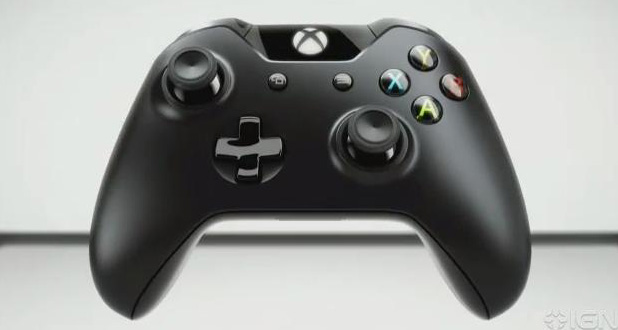
then I realised how big the console was and saw the controller… Now, it
appeared that the console itself is about a 1/5th to ¼ bigger than
the original Xbox 360. This makes it bigger than the original PS3, which was rather large compared to
other consoles in the past. But this was not the worst change. I do believe
that the controller looked very comfortable to hold; much like the Xbox 360 and that the D-Pad issue has
been fixed. But the thing that bugged me was the repositioning of the “guide”
button located in the centre. It has been moved up a good inch or two since the
360 controller. I think this could
cause problems and hurt thumbs trying to reach it without looking!
Now, at a game consoles reveal event, you may expect games
to be one of the first things to talk about and the main focus for the console.
But if your life depended on that thought, then you, along with almost 56.25million
(of the 75million 360 purchases)
people would have just died… IGN did a poll involving over 70,000 people and
discovered that 75% were disappointed with the event. Yep, in reality about
75-85% of the event was actually more about making the Xbox One a media centre hub for every possible audience. Hence the
name “One” possibly hinting that it will be the one thing you need in your
house…
Let me just take one second to look at the name of this
leviathan VCR player. It’s just awful. I mean, firstly it’s hard to say in one
breath. Now you might be thinking that I’m over exaggerating a little. But come
on! The rumoured and production codenames were: Durango, Infinity, Xbox, 720,
with many others. I think you’d agree with me in saying that any one of these
names sounds better than “One”! I mean that’s just close to being like the Wii or the Wii U… just… terrible names.
Back to the conference, and what’s this? They’re talking
about the dashboard and the snap feature. Nice idea, and well executed in the
demonstration. But when would you ever need to search the internet (might I add
Bing search… just really?!) at the same time as watching a film or playing a
game. I mean it’s like reading a book while also driving a car… literally. Now,
I don’t mind some cool multimedia features, like the Love Film or BBC iplayer
app on the 360, if they mention it
briefly or even talk about it for 10 minutes or so during their conferences.
But spending about 30 minutes talking about television and how good their new
television services will be in an hour long conference and the gaming magic
seems to dissipate.
Much of the focus on television also centred around US media
and sports. Now, fair enough, Microsoft
is an American company. However, it’s a global business and they need to
provide to their market audience (now apparently every living soul). Just
looking at a frickin’ map it is clear, however much they want to believe it,
that America is not a majority on a global scale, and a huge chunk of Microsoft lovers come from everywhere
other than the USA! So anyway, Microsoft’s
Senior VP Yusuf Mehdi came on to now talk about sport and the Skype feature.
Finally, something good, Skype could be useful for in-game communication and
with the Kinect 2.0 you can connect
visually as well. But, if you thought they’d focus on a globally recognised
sport such as football, or basketball you’d be completely wrong. That’s right…
They focused on an American sport NFL. Just WHY Microsoft?!
Kinect 2.0
So this focus on sports was probably the first turning point
towards games, now about 30-35 minutes into the hour long review. Now, sports
games are not my favourite genre to play, but I understand that a large amount
of gamers enjoy to play these games. However, I don’t believe that sport games
really appeal to core gamers that much, and personally at this point, I’m getting
ready to put a metal knife in the toaster… So finally EA Sports get to show off their new “Ignite” engine for next gen
sports games! A little voice in your head tells you “Now we get to see some
gameplay of next gen sports!” Shortly after, you hear a faint gunshot and the
voice stops. This is all because the “gameplay” turns out to be a pre-rendered
sequence of footage with some shots of wireframe models in 3DSMax! By now, you
can here every gamer screaming or crying from being stabbed in the back for
about 40 minutes straight.
The first glimmer of hope! The blatantly obvious and
predictable Forza 5 announcement,
along with a new IP; Quantum Break.
Finally, we get to see some gameplay from at least one of these, right?
Wrong! Again pre-rendered footage and a painfully tacky and slightly spooky
live action trailer. Forza 5 did look
pretty though… but without gameplay, I think I’m just going to believe that it
was a cinematic. Wake up Microsoft! The worst thing about this part of the
conference was that they quickly added that there will be 15 more Xbox
exclusive titles released over Xbox Ones first year, with 7 new franchises. Fantastic
news, but nothing was given. Not even a couple of teasers or hints to get our
nerves tingling. Instead, Halo’s famous art style and scenery appear on screen.
Could it be that the horribly overused franchise of Halo will be announcing their next title? Nope… they’ve returned to
television, with the announcement of the Halo:
The television series (exciting name too… Not!).
By now it’s clear that with the last 10 minutes of the
conference, we may finally see some gameplay with the imminent reveal of the internationally
anticipated Call of Duty: Ghosts.
Well, if you thought this… your dead body just got incinerated. That’s right,
instead of Activision’s usual tactic
of showing off a short real time gameplay demo. Somehow they thought it would
be a good idea to show two in depth videos explaining almost nothing anyone cares
about and a trailer. Understandably, Infinity
Ward wanted to show off their “incredible” new game engine for next gen CoD
titles. One of the videos showed some glimpses of in-game action, focusing on
the technical aspects, such as:
Fish AI – giving them the sense to move out the way of the player
Interactive smoke – which moves around objects
Continued movement – such as jumping over a wall that you’ve just sprinted at
More curves… - basically advanced levels of tessellation and detail dependant
on depth of field
Dog – the dog that you will apparently love like a friend…
MW3 > Ghosts comparison
Now I’m not brilliant with game knowledge (HAHAHA just
kidding) but I believe that these “advanced” features have been implemented in
games for years now. I’ll just mention a few names in order of the CoD
features: Spyro (PS1), Metro 2033,
Battlefield 3, every game ever and Fallout
3. Not to mention that the environments were still easily outmatched by
that of Crysis from 2007.
So with the event finally over and me perched on the edge of
my window ready to jump, we have many unanswered questions to be answered at
the post show event. This is the time where they’ll finally clear up this crap
rumour about Always-Online DRM on the Xbox
One.
Or maybe not. In matter of fact, they didn’t even seem to
know the real answer, instead being very unclear with them. As it turns out it
is not Always-Online, they obviously learnt from the mistakes of the past with Diablo 3 and Sim City. But what’s that?! You have to connect and update every 24
hours for games to work… sounds a little bit like always-online to me… I don’t
know what dimension of time Microsoft’s
employees live in, but they’re the only one’s clapping for this.
This is without even touching on the horrible decision for Microsoft to make you register and
install all of your games onto your Xbox
One. Let’s look at the install idea first. So yeah, it sounds like a clever
idea, I can have all my games in one place and ready to play at the click of a
button. You know there has to be a BUT! Once the game has been registered, the
physical disc is unusable. As a console gamer, this presents a wide range of
problems. Firstly, if you want to lend a game to a friend, they must pay a fee
to play (rumoured to be the price of the game itself). Secondly, if you buy a
pre-owned game, you will also have to pay this fee to “register” it to your Xbox One. In my personal opinion, it
sounds to me that physical discs seem pointless; why not just use digital
downloads if that’s the process. Also, I’m pretty sure that everything I just
described is a computer… Microsoft
hasn’t made a console; so far they’ve taken everything that makes a console and
buried it alive.
Another problem that arises from installing all your games
on the Xbox One’s hard drive is that
it only has 500GB of data. Xbox One
will finally have a Blu-ray drive and
therefore Blu-ray discs. Blu-ray discs commonly hold at least
4.7GB of data. Doing the simple maths, you find that you can only install about
106 games on average. You may be thinking “That’s a reasonable amount of games
I can install.” Well, bear in mind that the Xbox
One is being designed as an entertainment device. Therefore, it would be
expected for someone to also install movies and other forms of entertainment,
as well as apps and Downloadable Content (DLC) for in-game expansions. “But, I
can replace the hard drive if I need.” If this thought passed through your
head, you’re really not getting this are you… Microsoft has stated that only they have the power to remove these
internal hard drives, but have said that external hard drives will work. But
surely the name suggests that there will be ONE box in the room. Now it’s a box
with other smaller boxes surrounding it. Good move Microsoft, there’s another thing that makes the Xbox so great… G.O.N.E.
I’m very nearly at the end of this monster rant, so if you’ve
got this far… you can hopefully make it to the end.
One last question remains! The Xbox One’s
cross compatibility. Able to play all of my 50-100+ Xbox 360 games in the same place as all of my new games; they’ve truly
succeeded in merging current and next-gen hardware, in order to only have the Xbox One and therefore one device in
your room. But, here is where Microsoft
has made possibly one of their largest mistakes. They claim that that there is
no backwards compatibility whatsoever…
It’s okay though Microsoft have
thought this one out and said that you can keep your Xbox 360 (I’m starting to think that’s all I’ll keep at the
moment). But, again, that’s another extra box to go with the Xbox ONE! Also, if you’re like me and
you have the original version of the Xbox
360, it will most likely be on its last legs and ready to call it a day.
Xbox 360
For me, the next Xbox
was going to be my saviour, like the Jesus of the console world, taking all my
gaming problems away and uniting all gamers as one. But Microsoft may have well of come on stage and presented a cardboard
box saying “Presenting the ‘Box’, its pretty crap, don’t get it unless you’re
under 5… those guys like boxes…”
In conclusion, I was extremely disappointed with the Xbox One reveal. It barely showed
anything to do with gaming, with nothing to really excite the core gamers. The
presentation itself seemed badly organised and executed confusingly. And
everything Microsoft has grown great
to be with the Xbox 360’s life cycle
has been removed or burnt at the stake, supposedly for profit. But the worst
part is that Microsoft’s Senior VP
Yusuf Mehdi claims that they believe in achieving 1 billion unit sales of the Xbox One in its cycle, alongside a
further 25 million Xbox 360 sales.
Personally though, I honestly think they’re pulling these figures out of a squirrels
arse, bearing in mind that the Xbox 360
has sold roughly 75.9 million in 7 years. At this moment in time, I am strongly
swayed towards changing allegiance and converting to the Japanese goliath Sony. The PlayStation 4 so far exceeds the Xbox One in every way imaginable.
I eagerly anticipate E3 on the 10th June to find
out if Microsoft can dig themselves
out of their grave. But I believe they may be 12 feet too deep. Goodbye Microsoft, it was nice knowing you.
Thank you for reading my rant… check back after E3 to see if I’ve bothered to
expand on my views.